
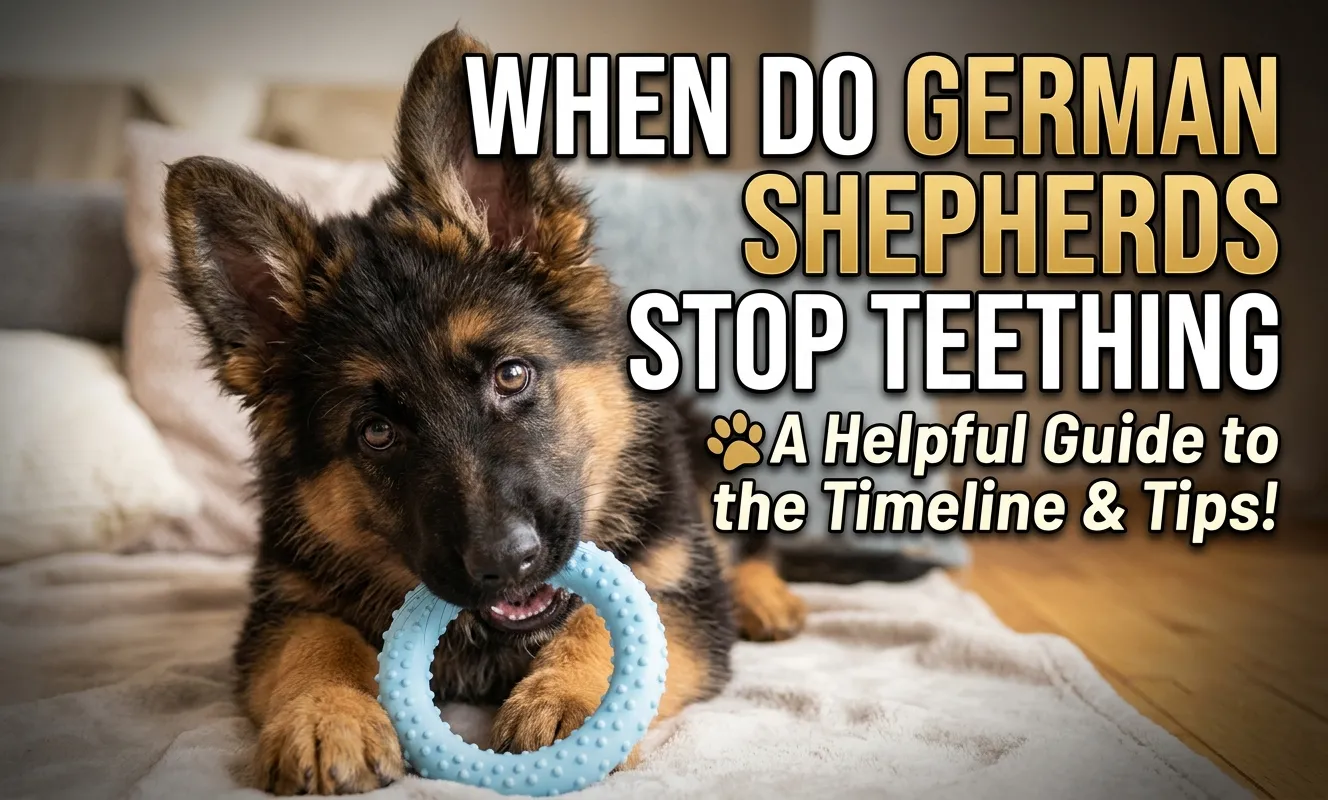
If you have a German Shepherd puppy, you are likely intimately familiar with the “land shark” phase. They are incredibly cute, incredibly smart, and armed with a mouthful of needle-sharp teeth that they want to test on everything, including your hands, shoes, and furniture.
If your arms are currently covered in scratches and you’re wondering when your sweet pup will finally outgrow this biting frenzy, you aren’t alone. Here is everything you need to know about the German Shepherd teething timeline, what to expect, and how to survive it.
Table of Contents
- The German Shepherd Teething Timeline
- Signs Your German Shepherd is Teething
- How to Help Your Puppy (and Save Your Furniture)
- Final Thoughts
RELATED
- Do German Shepherd Puppies Lose Their Teeth?
- German Shepherd Teeth Problems: Causes, Prevention, Treatment
- How Long Does It Take For a German Shepherd To Be Fully Grown
| Open this article How to Determine the Age of a German Shepherd Puppy or Dog and go to the section Dental Anatomy of Dogs to read in detail about Deciduous Teeth and Permanent Teeth, and 4 types, including Incisors, Canines, Premolars, and Molars. |
The German Shepherd Teething Timeline
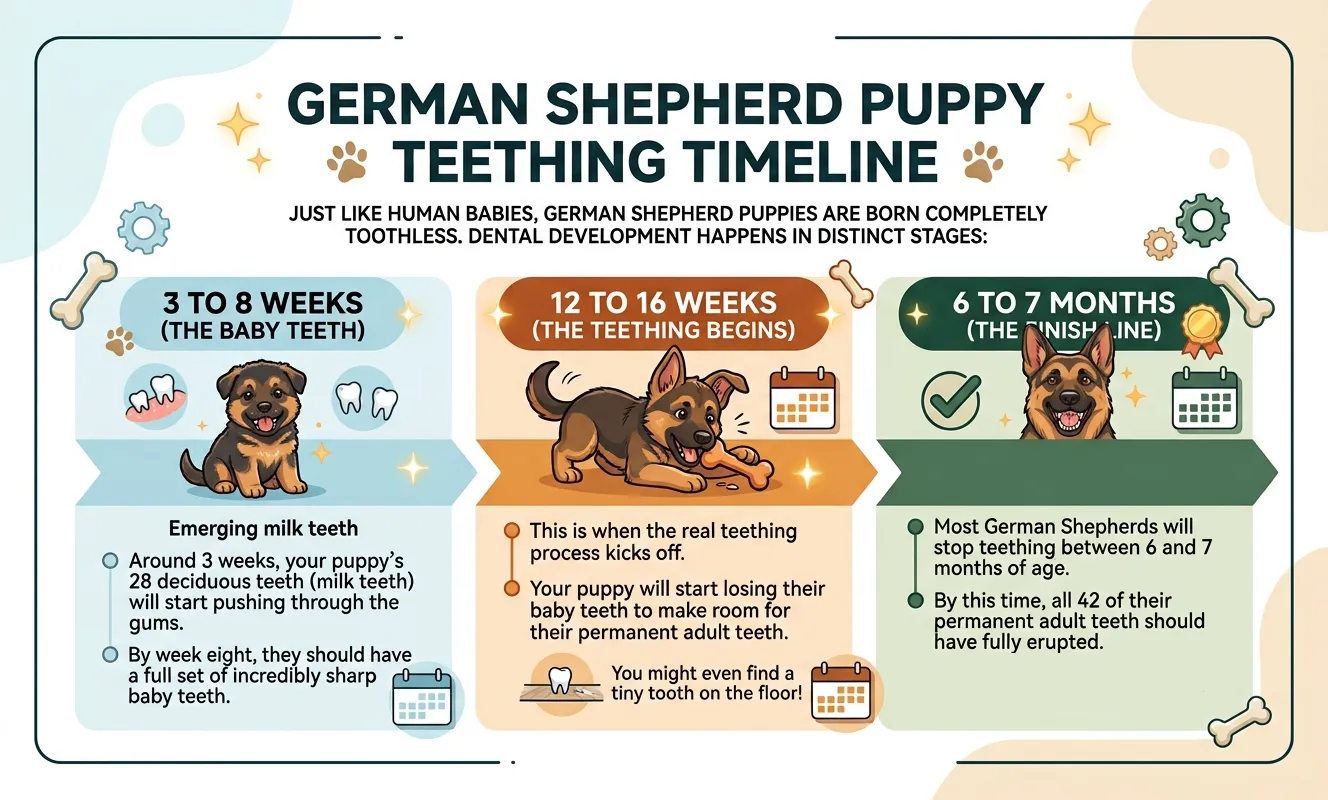
Just like human babies, German Shepherd puppies are born completely toothless. Their dental development happens in a few distinct stages:
- 3 to 8 Weeks (The Baby Teeth): Around the three-week mark, your puppy’s 28 deciduous teeth (milk teeth) will start pushing through the gums. By week eight, they should have a full set of incredibly sharp baby teeth.
- 12 to 16 Weeks (The Teething Begins): This is when the real teething process kicks off. Your puppy will start losing their baby teeth to make room for their permanent adult teeth. You might even find a tiny tooth on the floor!
- 6 to 7 Months (The Finish Line): Most German Shepherds will stop teething between 6 and 7 months of age. By this time, all 42 of their permanent adult teeth should have fully erupted. In some late bloomers, it might stretch closer to 8 months, but the 6-to-7-month mark is the standard finish line.
| II For Dog Lovers! Whether you’re shopping for yourself or searching for the perfect gift, Loyal Strings (Our Etsy Store) offers personalized German Shepherd and dog apparel that celebrates your love for dogs. |
Signs Your German Shepherd is Teething
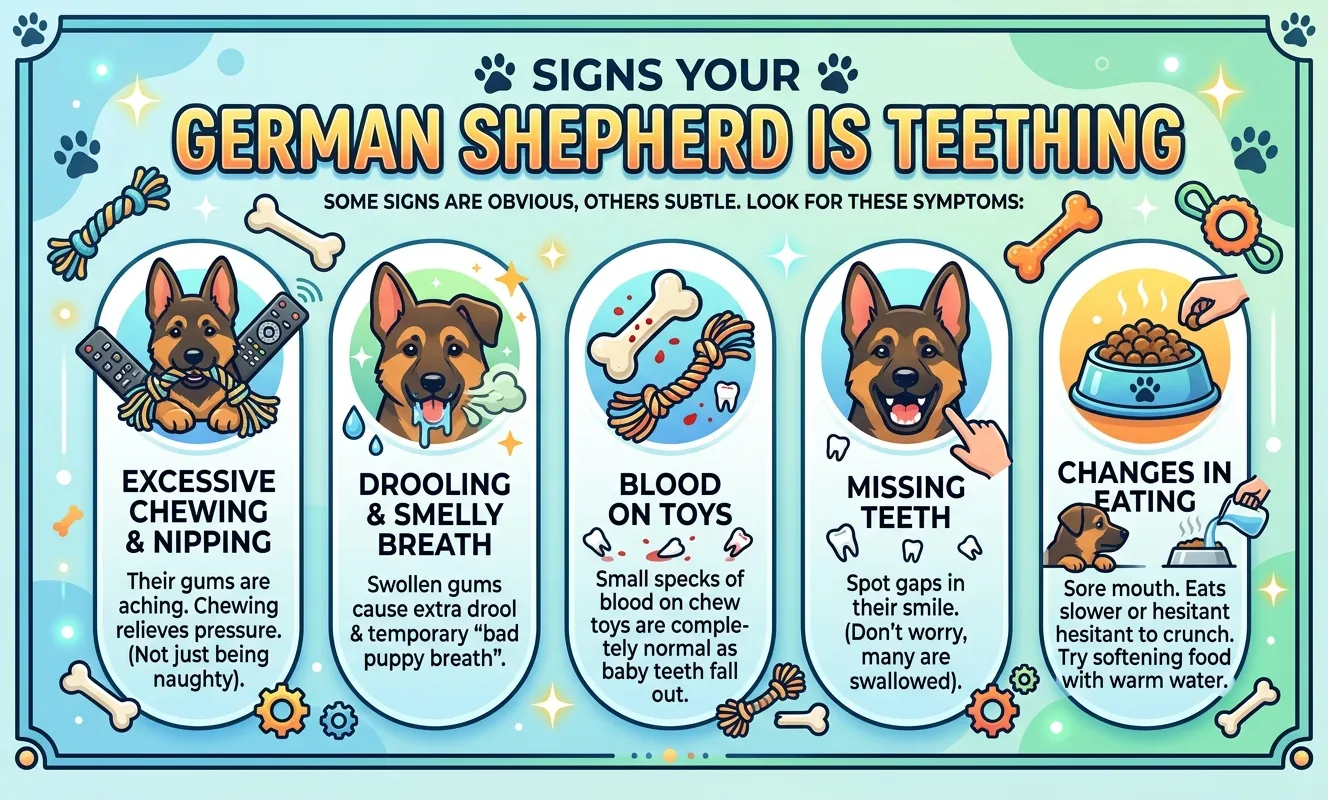
Sometimes the signs are obvious (like a chewed-up remote control), but other symptoms are a bit more subtle. Look out for:
- Excessive Chewing and Nipping: They aren’t trying to be naughty; their gums are genuinely aching, and chewing relieves the pressure.
- Drooling and Smelly Breath: Swollen gums can lead to extra drool and a temporary case of bad puppy breath.
- Blood on Toys: Finding small specks of blood on their chew toys or ropes is completely normal as their baby teeth fall out.
- Missing Teeth: You might spot gaps in their smile, or occasionally find a tiny, rice-sized tooth in their bedding or food bowl. (Don’t worry if you don’t find many; most puppies swallow them harmlessly while eating).
- Changes in Eating Habits: If their mouth is particularly sore, they might eat slower or seem hesitant to crunch on hard kibble. Adding a little warm water to soften their food can help.
How to Help Your Puppy (and Save Your Furniture)
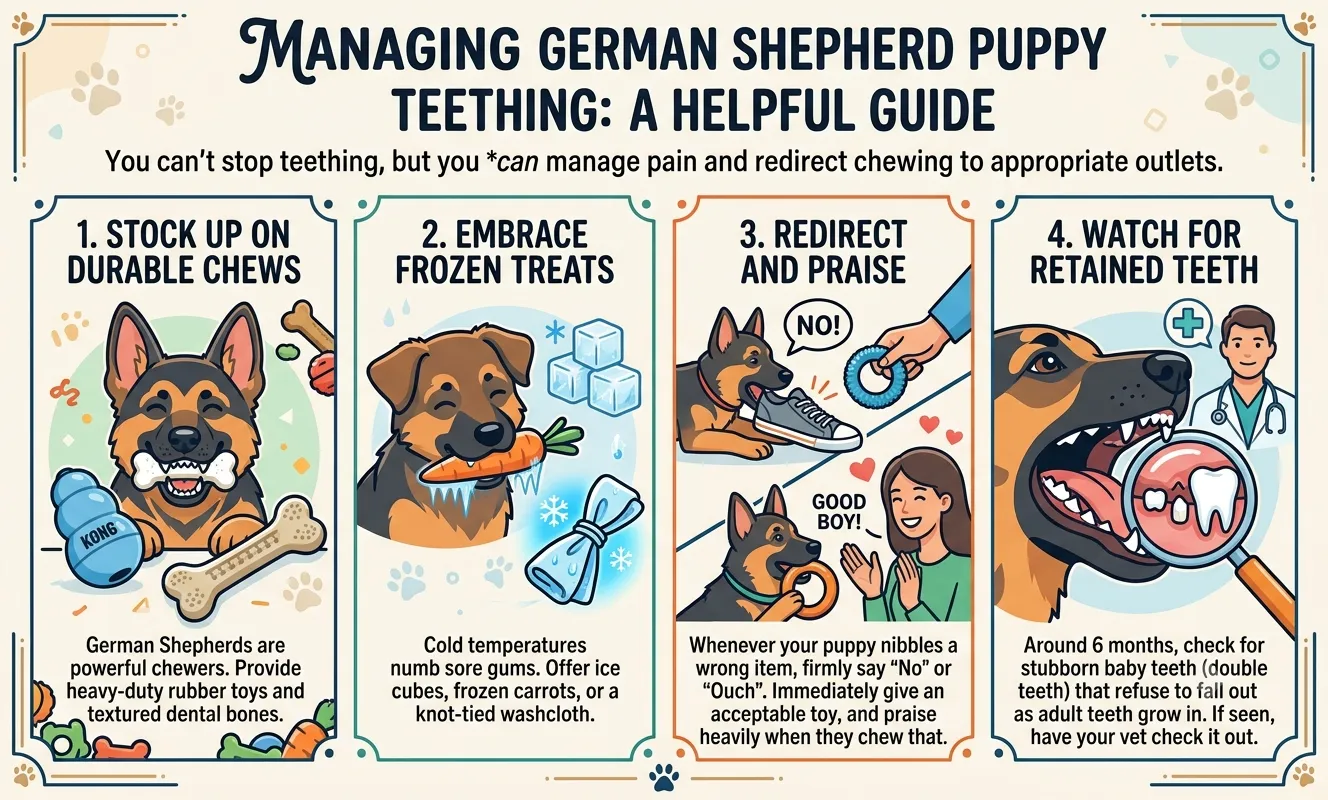
You can’t stop the teething process, but you can manage the pain and redirect their chewing instincts to appropriate outlets.
- Stock Up on Durable Chews: German Shepherds are powerful chewers, even as puppies. Provide heavy-duty rubber toys (like KONGs) and textured dental bones.
- Embrace Frozen Treats: Cold temperatures naturally numb sore gums. Try offering ice cubes, frozen baby carrots, or freeze a wet washcloth (tied in a knot) for them to gnaw on.
- Redirect and Praise: Consistency is key. Whenever your puppy tries to nibble your hand or your favorite sneakers, firmly say “No” or “Ouch,” immediately hand them an acceptable chew toy, and praise them heavily when they chew on that instead.
- Watch for Retained Teeth: Around the 6-month mark, take a quick peek in their mouth. Occasionally, a stubborn baby tooth will refuse to fall out while the adult tooth grows in right next to it. If you see this “double tooth” situation, have your vet check it out, as it can cause crowding.
Final Thoughts
While the German Shepherd teething phase can be exhausting, it is a relatively short season in your dog’s life. By the time they hit 6 or 7 months old, the physical pain of teething will be behind them, and those razor-sharp baby teeth will be replaced by a permanent adult set.
Stay patient, keep a steady supply of frozen treats on standby, and stick to your bite inhibition training. Before you know it, your little land shark will transform into a calm, focused, and loyal companion with a beautiful, healthy smile!
Enjoyed this post? Share it with your friends to spread the word! We’d love to hear your thoughts—drop your feedback in the comments below!
Also Read
- What are Challenges of Training & Raising German Shepherd?
- Training German Shepherds for Families With Young Children
- What Health Products Should Every German Shepherd Owner Have?
- Common Mistakes to Avoid When Grooming a German Shepherd


Leave a Reply