

Bringing home a German Shepherd puppy is an incredibly exciting experience. Those oversized paws, floppy ears, and soulful eyes are enough to melt anyone’s heart. However, beneath that undeniable cuteness lies a highly intelligent, energetic, and powerful working breed in the making.
Raising a German Shepherd Dog (GSD) is not quite like raising a typical lap dog. They require a distinct level of commitment, structure, and understanding right from day one.
If you are preparing to welcome one of these magnificent pups into your home, here is exactly what you need to know.
| II For Dog Lovers! Whether you’re shopping for yourself or searching for the perfect gift, Loyal Strings (Our Etsy Store) offers personalized German Shepherd and dog apparel that celebrates your love for dogs. |
Table of Contents
- Prepare for the “Land Shark” Phase
- Socialization is Non-Negotiable
- They Thrive on Routine and a “Job”
- The “German Shedder” Reality
- Final Thoughts
RELATED
- How to Identify the Purity of German Shepherd Puppy | 5 Ways
- How to Know German Shepherd Puppy is Male or Female | Gender
- How to Spot a Fake German Shepherd Puppy | 10 Tips
- When Do German Shepherds Stop Teething
- How Long Does It Take For a German Shepherd To Be Fully Grown
01. Prepare for the “Land Shark” Phase
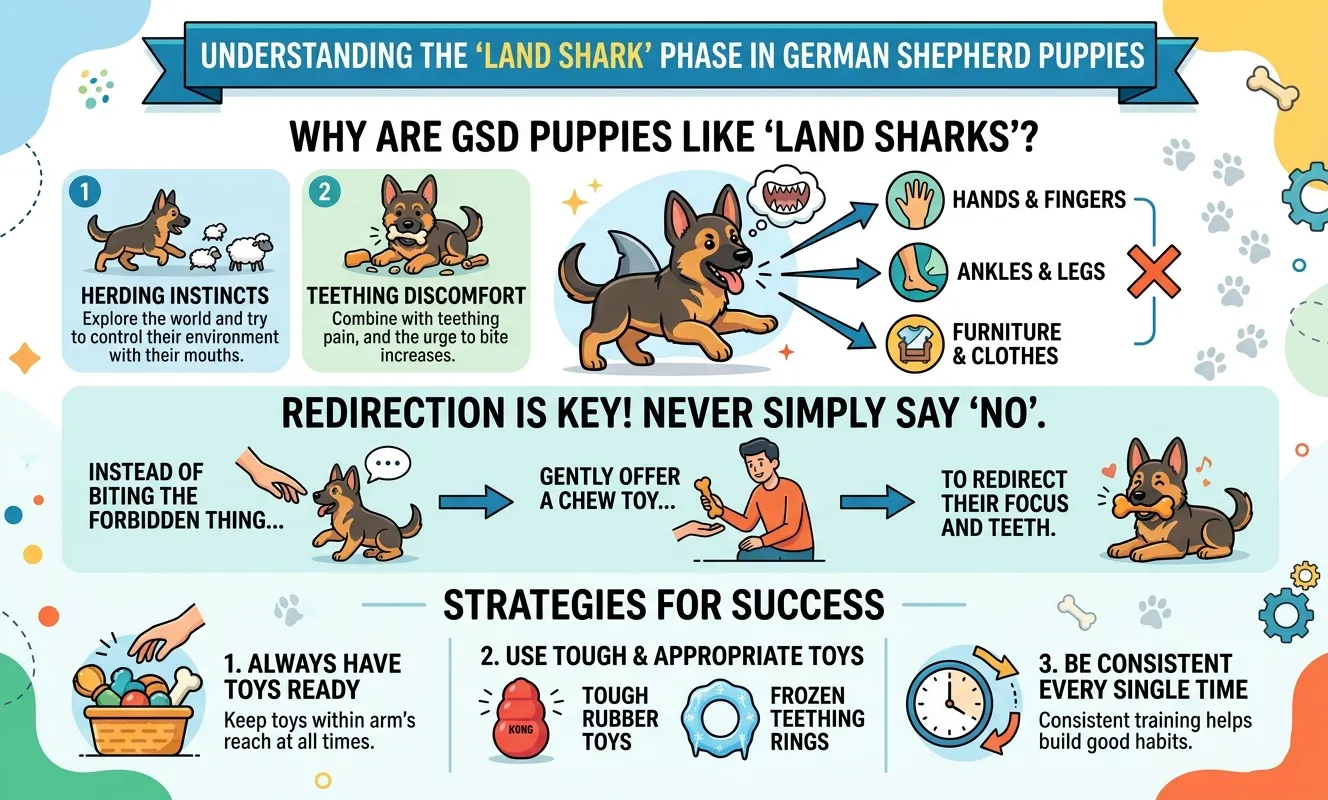
Ask any German Shepherd owner about the puppy months, and they will likely shudder while muttering the words “land shark.” German Shepherds are a herding breed, and puppies explore the world and try to control their environment with their mouths.
- The Teething Factor: Combine herding instincts with the discomfort of teething, and you have a puppy that wants to nip hands, ankles, and furniture.
- Redirection is Key: You cannot simply tell a GSD puppy “no” and expect the urge to bite to vanish. You must redirect their teeth to appropriate chew toys every single time. Keep tough rubber toys or frozen teething rings within arm’s reach at all times.
RELATED
- German Shepherd Teeth Problems: Causes, Prevention, Treatment
- Do German Shepherd Puppies Lose Their Teeth?
- How to Determine the Age of German Shepherd Puppy or Dog
02. Socialization is Non-Negotiable
German Shepherds are naturally protective and fiercely loyal to their families. While these are highly sought-after traits, they can quickly morph into fear, anxiety, or aggression if the dog is not properly socialized during their critical developmental window (typically between 8 and 16 weeks of age).
- Positive Exposure: Socialization doesn’t mean letting every dog at the park run up to your puppy. It means exposing them to new sights, sounds, surfaces, people, and well-behaved animals in a controlled, positive way.
- Building Confidence: The goal is to show your puppy that the world is a safe place, building a confident, neutral adult dog who can assess threats accurately rather than reacting out of fear.

RELATED
- Training German Shepherds for Families With Young Children
- What are Challenges of Training & Raising German Shepherd?
- How to Determine Most Desirable Traits in German Shepherd?
- What are Challenges of Training & Raising German Shepherd?
03. They Thrive on Routine and a “Job”
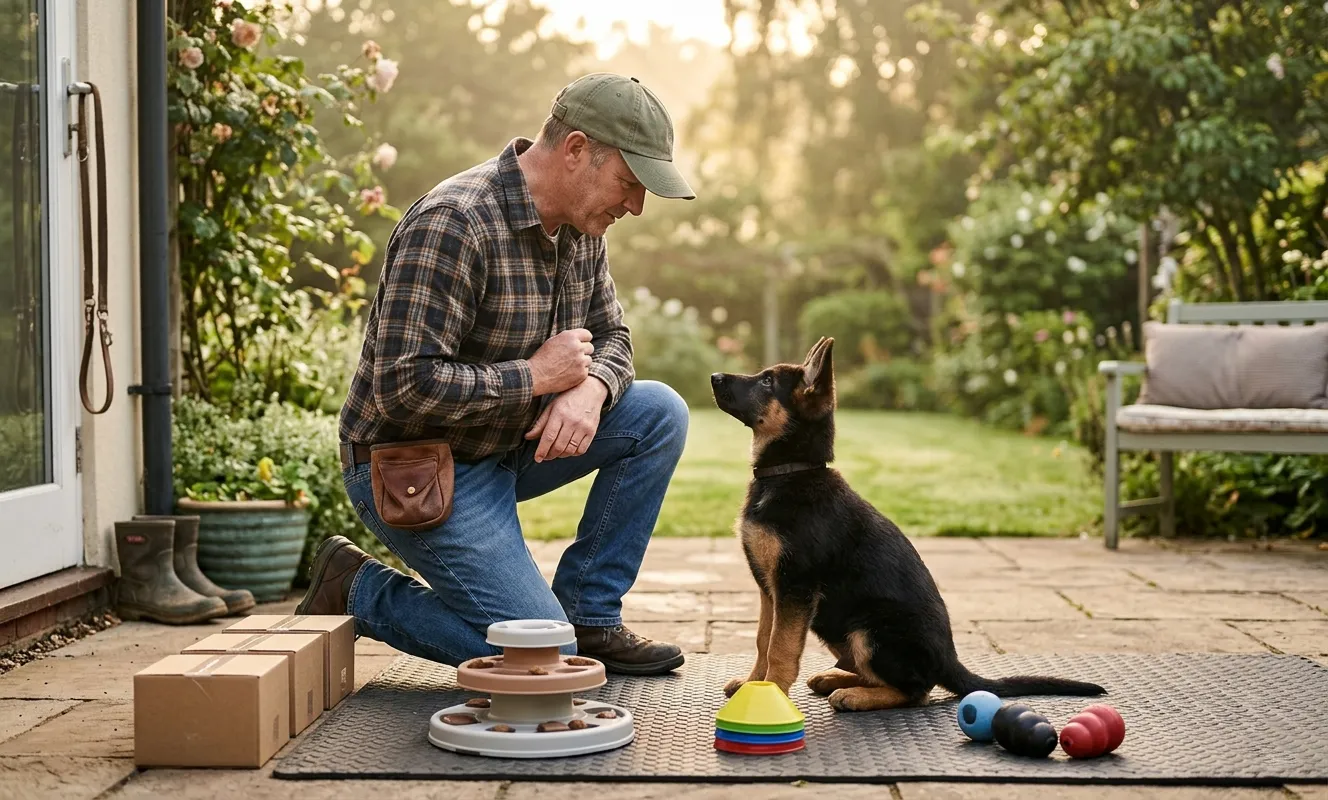
GSDs were bred to work closely with humans. Even at a young age, they look to you for direction. Establishing a solid daily routine helps them feel secure and prevents behavioral issues born of boredom.
- Embrace the Lifestyle: Raising a GSD is a lifestyle change. You will quickly get used to throwing on your favorite classic dad hat for those crack-of-dawn potty breaks, rain or shine.
- Mental Over Physical: While physical exercise is important, remember that puppy joints are fragile. Avoid forced running or jumping. Instead, tire them out mentally. Short, five-minute obedience sessions, puzzle toys, and scent games will exhaust a GSD puppy much faster than a long walk.
RELATED
- German Shepherd Energy Levels by Age | Activity Needs
- Best Way to Take German Shepherd for Walk: A Complete Guide
- How to Tell if German Shepherd Feels Comfortable Around You
- Ultimate Guide to German Shepherds Water Activities
- German Shepherd Running Abilities: Speed, Distance, Endurance
- Understanding the Prey Drive of German Shepherds
- What is the Average Intelligence of German Shepherds?
04. The “German Shedder” Reality
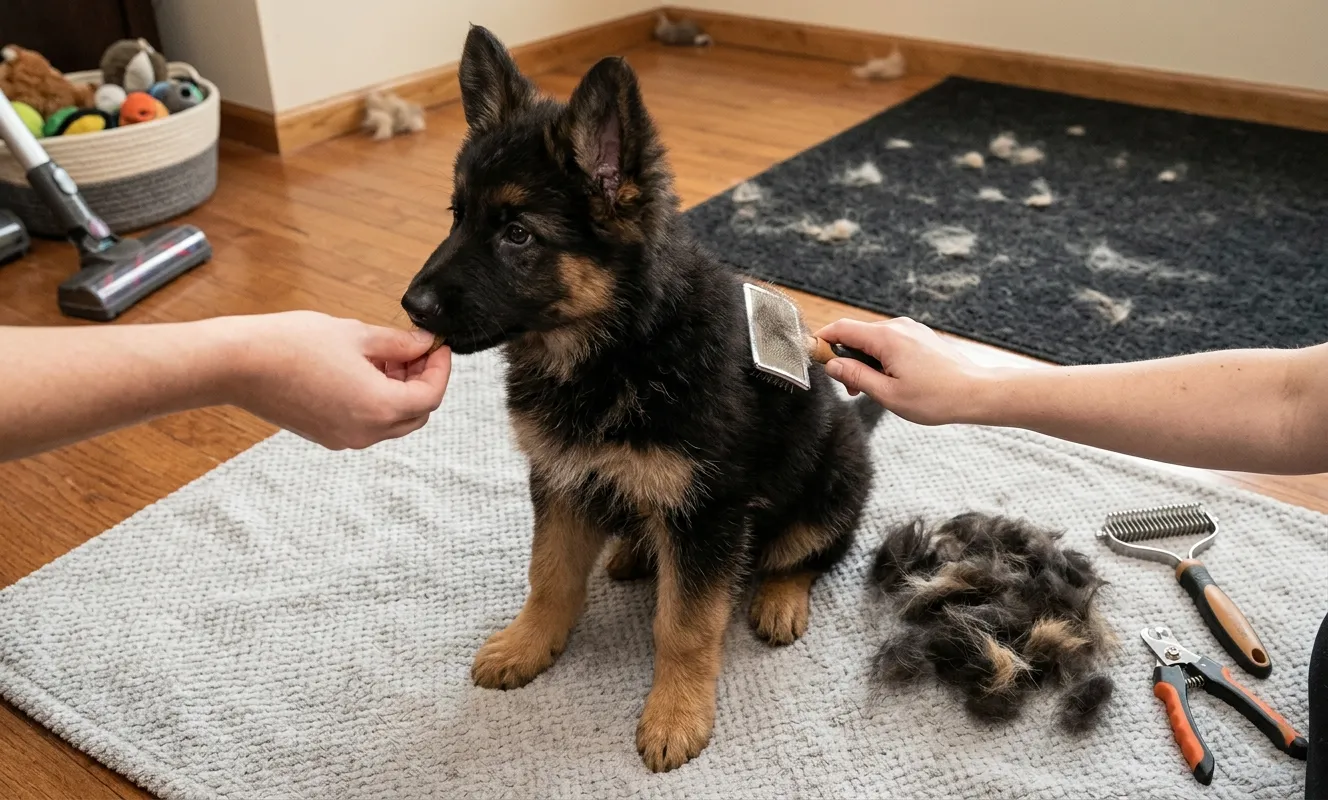
If you are bringing home a GSD, say goodbye to a hair-free home. They have a dense double coat designed to protect them from harsh weather, and they shed year-round, with two massive “blowouts” in the spring and fall.
- Start Grooming Early: Introduce your puppy to brushes, nail clippers, and bathing right away. Make it a highly rewarding experience with plenty of treats so they learn to tolerate—and perhaps even enjoy—the grooming process. A slicker brush and an undercoat rake will quickly become your best friends.
RELATED
- A Guide for Raising German Shepherd Puppy at Home
- How to Give German Shepherd a Bath: A Complete Guide
- 4 Types of German Shepherd Coats
- Common Mistakes to Avoid When Grooming a German Shepherd
Final Thoughts
Bringing a German Shepherd puppy into your life is a massive commitment of time, energy, and patience. The first year will test you with sharp puppy teeth, endless energy, and the stubborn streak of a highly intelligent creature testing its boundaries.
However, the effort you put into those early months pays off exponentially. By providing consistent training, early socialization, and clear boundaries, that chaotic little “land shark” will grow into the fiercely loyal, steady, and brilliant companion the breed is famous for.
A well-raised German Shepherd isn’t just a pet; they are a devoted partner, and the journey of raising one from a puppy is one of the most rewarding experiences a dog lover can have.
Also Read
- Effective Methods for Crate Training German Shepherd Puppy
- Monthly & Annual Expenses of Owning a German Shepherd
- 8 Ways to Identify Long Coat German Shepherd Puppy


Leave a Reply